Diamond Blade Buying Guide: Tile, Stone, Concrete and Carbide
A diamond blade is the one consumable people buy almost at random. They grab "a diamond blade," fit it to the grinder, and wonder why the tile chips, the cut wanders, or the blade glazes over and stops cutting after one wall. The truth is there is no single diamond blade — there are several quite different tools that happen to share the name, and the gap between the right one and the wrong one is the difference between a clean job and a ruined, dangerous afternoon.
This guide is for the owner, tiler, or builder choosing a diamond blade or cup for tile, stone, concrete, or hard tool materials. We'll explain how a diamond blade actually cuts, the rim types and what each is for, wet versus dry, and how to match the blade to the material so it lasts.
How a diamond blade actually cuts
A diamond blade does not slice like a saw — it grinds . Industrial diamond grit is held in a metal bond around the rim; as the blade spins, exposed diamonds abrade the material, and as they wear and break away, the bond erodes just enough to expose fresh diamonds underneath. That self-sharpening balance is the whole game. Two things follow from it:
- Bond hardness must be matched to the material. Hard, dense materials (porcelain, granite, carbide) need a soft bond that releases worn diamonds quickly so sharp ones keep appearing. Soft, abrasive materials (green concrete, asphalt, brick) need a hard bond, because the material itself is so abrasive it would strip a soft bond and waste diamonds in minutes.
- A glazed blade has the wrong bond, or is being used wrong. If a blade stops cutting and the rim looks shiny, the diamonds are worn flat and the bond isn't releasing them. Cutting a few passes in an old abrasive block ("dressing" the blade) re-exposes the diamonds — but the lasting fix is the correct bond for the job.
Rim types: continuous, segmented, turbo
The shape of the rim decides how fast it cuts and how clean the edge is.
| Rim type | Looks like | Best for | Trade-off |
|---|---|---|---|
| Continuous rim | Smooth, unbroken edge | Tile, porcelain, marble, glass — chip-free edges | Slowest; needs water to clear and cool |
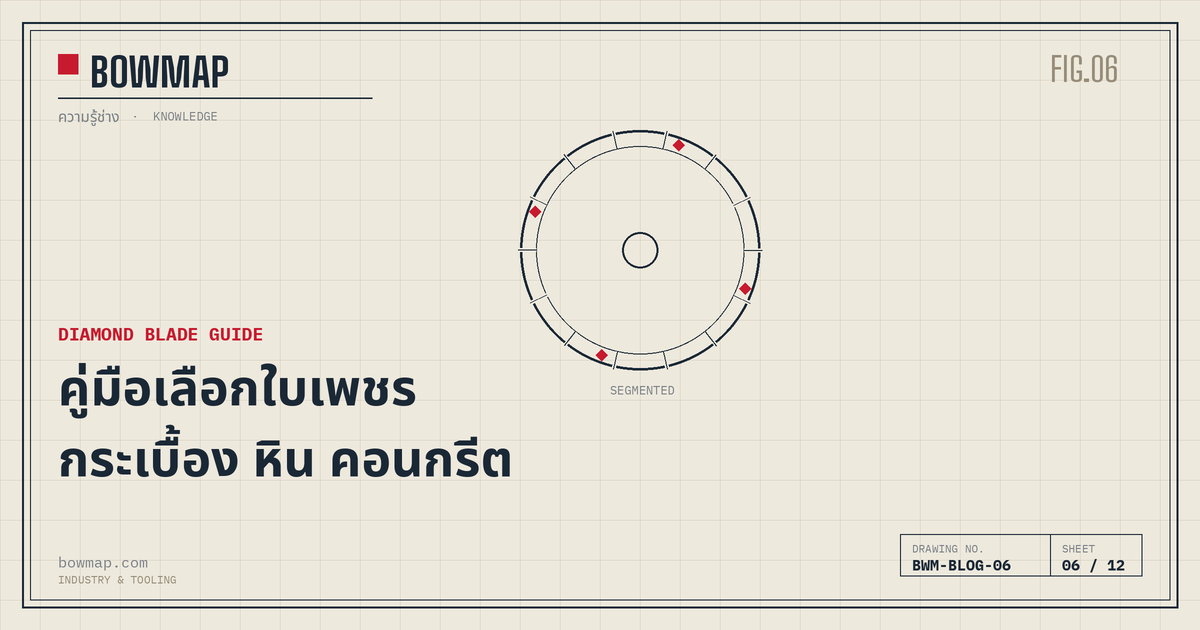
| Segmented | Gaps ("teeth") around the rim | Concrete, brick, stone — fast, dry cutting | Chips brittle tile; rougher edge |
| Turbo | Serrated continuous rim | All-rounder between the two | Compromise on both speed and finish |
For finishing cuts on tile and stone, a continuous-rim blade gives the chip-free edge. For fast demolition and concrete work, a segmented blade clears debris and cuts cool through the gaps. A turbo rim is the do-everything choice when you don't want to swap blades constantly. For small, detailed, or curved work an electroplated blade — diamonds bonded in a single nickel layer on a thin disc — cuts a narrow kerf and handles tight shapes; a 4-inch electroplated diamond blade suits tile, glass, and fine stone work on an angle grinder.
Wet vs dry, and matching the blade to the job
Whether you cut wet or dry changes blade life, dust, and finish.
| Wet cutting | Dry cutting | |
|---|---|---|
| Blade life | Longer — water cools and clears swarf | Shorter — heat builds up |
| Dust | Almost none (slurry) | High — silica dust is a serious hazard |
| Edge quality | Cleaner, less chipping | Rougher |
| Use for | Tile, porcelain, stone, deep cuts | Quick site cuts where water isn't practical |
Wet cutting is strongly preferred for tile and stone: it cools the blade, clears the slurry, and — critically — controls the silica dust that dry-cutting masonry throws out, which is a genuine lung hazard. If you must cut dry, use a dust extractor or work outdoors with a proper respirator, and let the blade cool between cuts rather than forcing it.
For grinding rather than cutting — levelling a concrete slab, removing coatings, dressing a rough pour — a cup wheel is the right tool, not a blade. A 380 mm concrete grinding disc covers floor levelling and surface prep where a thin blade would be useless. And for the hardest materials of all — carbide tool tips, hardened dies, glass edges — a thin blade can't follow detail; a diamond file shapes and finishes carbide, glass, and hardened steel by hand where no steel file will even scratch the surface.
Fit and safety — the part that bites
A diamond blade spinning at 10,000+ rpm is unforgiving of mistakes:
- Match the arbor (bore) to the machine. A blade that doesn't seat true on the spindle wobbles, and a wobbling diamond blade is dangerous. Use the correct bore and flanges, not a stack of washers.
- Respect the maximum RPM marked on the blade. A blade rated below your grinder's speed can burst. Never fit a blade rated slower than the tool.
- Never side-load a cutting blade. Diamond cutting blades take force on the edge only; twisting or grinding with the side cracks the steel core — the same mistake that shatters abrasive cutting discs.
- Let the blade do the work. Forcing it overheats the bond, glazes the diamonds, and can warp the core. Steady pressure, let it cut at its own rate, and back off if the rim turns blue.
BOWMAP Industry & Tooling, a Samut Prakan supplier of Japanese-quality industrial tools, stocks electroplated and segmented diamond blades, concrete grinding cups and diamond files, so a workshop can match the bond, rim and format to the material instead of forcing one blade through every job.
FAQ
Q1. What diamond blade cuts tile without chipping? A continuous-rim diamond blade, used wet, gives the cleanest chip-free edge on tile and porcelain — the unbroken rim and water cooling prevent the edge breakout that a segmented blade causes. For small or curved cuts, a thin electroplated blade also works. Avoid segmented blades on brittle glazed tile.
Q2. What's the difference between electroplated and sintered (segmented) diamond blades? Electroplated blades hold diamonds in a single nickel layer on a thin disc — cheap, narrow kerf, good for fine and curved work, but shorter-lived because there's only one layer of diamond. Sintered/segmented blades have diamonds bonded all through thick segments, so they last far longer and cut faster on concrete and stone, but leave a rougher edge.
Q3. Why has my diamond blade stopped cutting? It has glazed — the exposed diamonds wore flat and the bond isn't releasing them, usually because the bond is too hard for the material or the blade overheated. Make a few cuts in an abrasive dressing block (or an old soft brick) to expose fresh diamond. Long-term, use a softer-bond blade for hard materials.
Q4. Do I have to cut wet, or can I cut dry? Many blades cut both, but wet cutting lasts longer, cuts cleaner, and controls the silica dust that dry masonry cutting produces — which is a real lung hazard. Cut wet for tile, stone and deep cuts. If you must cut dry, use dust extraction or a respirator, work outdoors, and let the blade cool between passes.